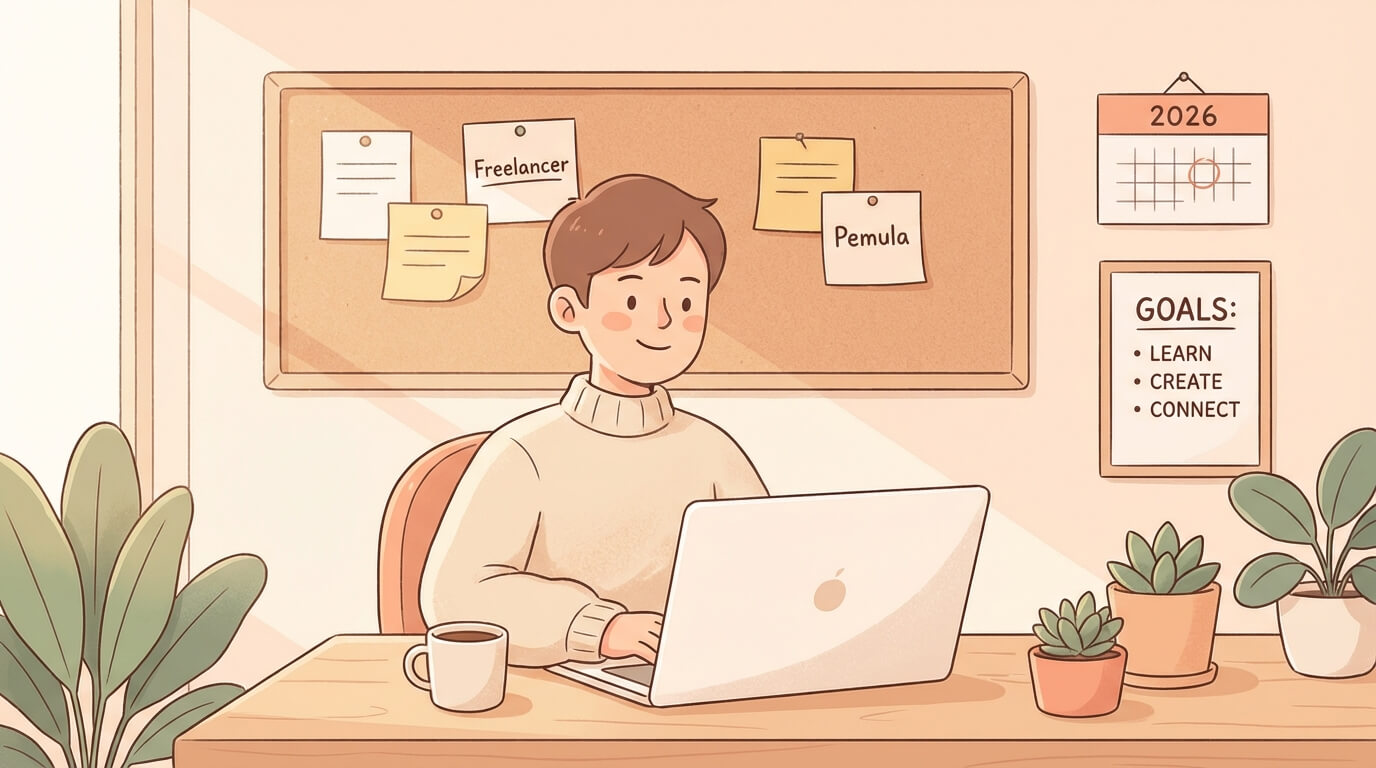
How to Become a Freelancer Without Experience in 2026
Tuesday, Dec 30, 2025
“I want to become a freelancer, but I don’t have any experience at all.”
If you’ve ever thought like this, you’re not alone. This is the most common doubt that haunts thousands of people who want to start a freelance career. The good news? Experience isn’t the only ticket to the freelance world.
In fact, every successful freelancer you see today was once in your position—without experience, without a portfolio, and full of doubt. What separates them is the courage to start.
This article will guide you step by step on how to become a freelancer without experience. Not empty theory, but practical strategies you can apply starting today.
What is a Freelancer?
A freelancer is someone who works independently without being tied to a long-term contract with one company. You offer services or expertise to various clients, set your own work hours, and have the freedom to choose which projects you want to work on.
Unlike full-time employees, freelancers:
- Are not bound by 9-to-5 office hours
- Can work from anywhere
- Set their own rates
- Have multiple income streams from various clients
Why 2026 is the Right Time to Start Freelancing
Continuing Remote Work Trend
Post-pandemic, global work methods have changed drastically. Large companies are now more open to the concept of remote work and hiring freelancers. According to various surveys, more than 50% of companies plan to increase their use of freelancers in their operations.
This means? Demand for freelancers continues to increase.
Digital Economy Opportunities
The digital economy is growing rapidly. With an increasing population and growing internet penetration, the need for digital content, design, website development, and various other digital services is exploding.
SMEs and startups are increasingly aware that they need professional help to:
- Manage social media
- Create marketing content
- Design promotional materials
- Build websites
And many of them prefer freelancers over expensive agencies. This is your opportunity.
7 Steps to Becoming a Freelancer Without Experience
1. Identify Skills You Can Sell
The first step isn’t finding clients—but recognizing what you can offer.
Many people get trapped thinking they need “wow” skills like programming or professional design. In fact, there are many skills that don’t require formal experience and can be learned in a relatively short time:
Beginner-friendly skills:
- Content writing — Writing blog articles, social media captions, or simple copywriting
- Canva design — Making posters, Instagram feeds, or presentations
- Social media admin — Scheduling posts, replying to comments, basic analytics
- Data entry — Inputting data, research, and compiling information
- Transcription — Converting audio/video to text
- Virtual assistant — Helping with administrative tasks remotely
- Translation — Various language pairs
Tip: Choose 1-2 skills you’re really interested in. It’s better to focus and become a specialist than to offer too many things at once.
2. Build a Portfolio from Scratch
“But I’ve never worked with clients, how can I have a portfolio?”
This is a classic question that actually has a simple solution. You don’t need paying clients to build a portfolio.
Create Fictional Projects
Choose a brand or business you like, then create a project as if they were your client:
- Write 3 blog articles for a fictional online store
- Design 9 Instagram feeds for an imaginary coffee shop
- Create a social media strategy proposal for a startup you admire
What’s important: treat it like a real project. Give your best effort.
Do Volunteer Projects
Offer your services for free to:
- SMEs owned by family or friends
- Non-profit organizations or communities
- Local places of worship or community centers
They get free help, you get a portfolio and testimonials. Win-win.
Document Personal Projects
Have a personal blog? That’s a writing portfolio. Often edit photos for your own Instagram? That’s an editing portfolio. Ever helped a friend make a digital invitation? Include that too.
Don’t underestimate what you’ve already done. Package it professionally and make it part of your portfolio.
3. Register on Freelance Platforms
After having at least 3-5 work samples, it’s time to register on freelance platforms.
Local Platforms
- Sribulancer — Largest freelance platform in Indonesia, suitable for beginners
- Fastwork — Focuses on creative services
- Projects.co.id — Many projects from local companies
Global Platforms
- Fiverr — Good for selling “gigs” or specific service packages
- Upwork — More competitive, but higher earning potential
Profile Optimization Tips
Your profile is your storefront. Make sure:
- Professional photo — Doesn’t have to be studio quality, just a photo with a neutral background and good lighting
- Clear headline — Example: “Content Writer | SEO Article Specialist”
- Selling description — Focus on benefits for clients, not just a list of skills
- Best portfolio — Display your 3-5 best works
- Competitive rates — As a beginner, start with a reasonable price
4. Set Realistic Rates
This is the part that often confuses beginners. Too cheap feels like undervaluing yourself, too expensive and you’re afraid no one will want you.
Pricing Strategy for Beginners
Research the market first. Look at other freelancers with similar skills on the same platform. What are their rates?
As a beginner without reviews, it’s fair if your rate is 20-30% below market average. This isn’t undervaluing yourself—it’s a strategy to get your first clients and build your reputation.
Example approach:
- If the average content writer on a platform charges $50/article, start with $35-40
- After getting 5-10 positive reviews, gradually increase
When to Raise Rates
Raise your rates when:
- You have 5+ positive reviews
- You’re starting to feel overwhelmed with requests
- Your skills have significantly improved
- You have repeat clients
Practical rule: Raise 10-20% every 3-6 months if your performance is good.
5. Get Your First Client
This is the most challenging part—and also the most exciting. Your first client is a milestone that will change your status from “want to be a freelancer” to “actual freelancer.”
Cold Outreach
Don’t just wait for clients to come. Be proactive!
- Make a list of 20-30 small businesses that might need your services
- Send personalized emails or DMs (not copy-paste)
- Explain specifically how you can help them
Simple template:
“Hello [Name], I noticed [Business Name]‘s Instagram account has interesting products, but posting hasn’t been consistent. I can help create content and a regular posting schedule. Would [Name] be interested in chatting more?”
Leverage Your Existing Network
Don’t be embarrassed to use connections you already have:
- Post on WhatsApp Story or Instagram that you’re offering freelance services
- Tell friends, family, and former colleagues
- Ask for referrals from people who already know your quality
Many successful freelancers get their first clients from people close to them.
Offer Discounts for Testimonials
Smart strategy: offer a discounted price with the condition that the client gives an honest testimonial after the project is complete.
Example: “I’ll give you a 30% discount for this first project, hoping [Name] can give an honest review that I can display on my profile.”
Clients are happy to get a cheap price, you get social proof. The first testimonial is very valuable.
6. Build Your Personal Brand
Over time, you don’t want to keep competing on price on platforms. A strong personal brand will make clients come to you—not the other way around.
Platforms for Personal Branding
- LinkedIn — Mandatory for professional freelancers. Update your profile, post insights about your field
- Instagram — Good for creative fields like design, photography, or content creation
- Portfolio website — Looks more professional. Can use free platforms like Carrd, Notion, or WordPress
Content Consistency
You don’t need to post every day. But consistency is more important than frequency.
Realistic schedule example:
- LinkedIn: 2-3 posts per week about industry insights or behind-the-scenes of your projects
- Instagram: 1-2 posts per week showcasing work results
7. Manage Time and Finances
Freelance provides freedom, but also full responsibility for self-management.
Free Time Management Tools
- Google Calendar — Schedule deadlines and meetings with clients
- Notion — Manage projects, to-do lists, and documentation
- Trello — Visualize project progress with a board system
- Toggl Track — Track work time per project (useful for calculating rates)
Freelancer Financial Tips
- Separate personal and business accounts — This is mandatory. Open a separate account specifically to receive client payments
- Set aside 30% for taxes and emergencies — Freelance income is unstable, so prepare a buffer
- Track all income and expenses — Can use a simple spreadsheet or apps like accounting software
5 Fatal Mistakes Beginner Freelancers Make (and How to Avoid Them)
1. Accepting Every Project
At the start, every project feels like an opportunity. But accepting projects that don’t match your skills or from red-flag clients will just drain your energy and damage your reputation.
Solution: Learn to say no. Better to focus on projects that match your abilities.
2. Not Having a Contract or Written Agreement
“Oh, this is just a friend” or “It’s a small project anyway.” Famous last words before not getting paid.
Solution: Always have a written agreement—at minimum via chat that mentions scope, deadline, and price.
3. Excessive Underpricing
Cheap prices at the start are okay, but don’t make them so cheap that they’re unsustainable. You’ll burn out and regret it.
Solution: Calculate your minimum viable rate. How many hours do you work, and what’s the minimum income you need?
4. Not Managing Client Expectations
Client says they want a “simple design,” but then asks for 10 revisions.
Solution: At the start, explain in detail what is and isn’t included in your service package. How many revisions, how long the process takes.
5. Waiting to Be “Ready” to Start
This is the biggest mistake. Many people procrastinate because they feel not ready enough, not skilled enough, not confident enough.
Solution: Start now with what you have. You’ll learn along the way.
Free Tools for Beginner Freelancers
| Category | Tools | Function |
|---|---|---|
| Design | Canva, Figma (free tier) | Graphic design, presentations |
| Writing | Google Docs, Hemingway Editor | Writing and editing |
| Project Management | Notion, Trello, Asana (free) | Manage projects and deadlines |
| Invoice | Wave, Canva Invoice Template | Create professional invoices |
| Communication | Google Meet, Zoom (free tier) | Meetings with clients |
| Time Tracking | Toggl Track, Clockify | Track work hours |
| Portfolio | Carrd, Notion, Behance | Showcase work |
FAQ - Frequently Asked Questions
How long until I can get my first client?
It varies, but with consistent effort, most new freelancers can get their first client within 2-8 weeks.
Do I have to quit my job first?
No. Many freelancers start as a side hustle while still employed. Resign after freelance income is stable.
What skill is fastest to monetize?
Content writing, social media admin, and Canva design are among the fastest to learn and have high demand.
How do I overcome feeling unconfident?
Remember that every expert was once a beginner. Focus on the learning and improvement process, not on perfection.
Do I need a business license or tax ID?
At the start, not mandatory. But if you’re already earning consistently, you should get proper tax documentation for reporting.
Conclusion: Take Your First Step Today
How to become a freelancer without experience isn’t really about waiting until you have experience. It’s about creating that experience yourself.
You don’t need expensive certificates. You don’t need insider connections. What you need is the courage to start, consistency to keep learning, and patience to build your reputation.
Concrete steps you can take today:
- Choose one skill you want to offer
- Create one work sample (fictional project is fine)
- Register on one freelance platform
That’s it. Three small steps that can change your career trajectory.
One year from now, you’ll thank yourself for deciding to start today—not waiting until you’re “ready.”
So, ready to start your freelance journey?